- Saaptiya? Thinnara? Oota Aayta? The Three Words That Explain South Indian Hospitality Better Than Any Welcome Speech
- Vinayagar Chaturthi: When The Favourite Guest Comes Home Again
- The Best Souvenirs Don’t Fit Inside a Suitcase
- Ganesh Chaturthi: A Celebration of New Beginnings, Faith and Togetherness
- Makhan, Mischief & Memories: A Janmashtami Celebration of Family, Food & Togetherness
- Temple Town Wedding Season Begins – What to Know
- When Onam Begins to Feel Like Home
- Celebrating 387 Years of Madras: The City That Never Stops Evolving
- Routes of Freedom: From the Madras Presidency to the Journeys We Take Today
- Onam Sadhya: The Taste that makes the tradition Complete
- Where Should You Host Your Next Corporate Event?
- Weekend Getaways from Chennai
- Best Family-Friendly Hotels in South India
- More Than a Feast: The Little Moments That Make Onam Unforgettable
- Explore Madurai, Kodaikanal & Palani in One Memorable Trip
- Thirumalai Nayakkar Mahal
- 48 Hours in Madurai: How To Fall In Love with Thoonga Nagaram
- Whispers in Stone and Jasmine The Timeless Soul of Chennai’s Kapaleeshwarar Temple
- The Little Things You Never Notice but Always Remember
- Tail Wags & Soulful Stays: Why Your Dog Needs A Holiday Too
- What Does Freedom Feel Like? A Journey Across South India
- The Friends Who Travel Together Collect Stories, Not Souvenirs
- Four Paws, Five Stars: What Your Cat Would Really Say About Your Hotel Stay
- Guru Purnima: The Greatest Teacher You Meet May Be the Journey Itself
- 48 Hours in Chennai: Everything You Need to Know
- Comfort Food, Comfort Company: The Soulful Dining Experience at GRT Hotels & Resorts
- The Many Moods of Pondicherry: A Soulful Guide to the French Riviera of the East
- The Smart Traveller’s Guide: Unlocking Affordable Luxury & Soulful Hospitality in Tamil Nadu
- Paws & Puddles: A Pet Parent’s Guide to Navigating Monsoons in the Hills
- The Aani Aadi Trail: Best Temple Towns to Visit This July in Tamil Nadu
- Palani Hills Tourism
- Best Time to Visit Wayanad
- Best Hill Station in Tamil Nadu
- Shevaroyan Temple Guide
- Solo Travel in India: Why More Travellers Are Choosing Themselves First
- Why the Best Business Decisions Aren't Always Made in Meeting Rooms
- The Great Botanical Coromandel Explorer: A Journey Through Flavour, Discovery & Gin
- Six Destinations, One Soulful Journey: Exploring the Arupadai Veedu Trail
- Millets, Fermentation & Gut Health: Ancient Wisdom on Your Plate
- Your Business Trip Just Became a Holiday Here's How to Make It Last 5 Days
- Mid-Year Reset: Why June Is The Best Time For a Workation in South India
- Smart Stays for Young Professionals: Where Work, Wellness & Wanderlust Meet
- South Indian Thali Decoded: It’s So Much More Than a Meal
- Where Big Ideas Find a GReaT Home Conference Planning in Andhra & Telangana
- Top 5 Bleisure - Friendly Cities in South India – Work Smarter, Wander Soulfully
- Chembra Peak
- Discover the Soul of Tirunelveli at the Aani Therottam
- Healthy Aging, Soulful Living: How Yoga Inspires a More Meaningful Journey
- Ani Uthiram Festival in Tamil Nadu: A Journey Through Heritage, Culture, and Spiritual Renewal
- Arupadai Veedu
- Weekend Getaway from Bangalore to Yercaud
- Chennai to Kodaikanal Trip
- Navagraha Temples
- Rain, Restore, Rejoice – Why Monsoon Is The Most Magical Time for a Spa Retreat
- The Art of Rainy Workation: Why the South Indian Monsoon is the Ultimate Bleisure Muse
- The Petrichor Path: A Soulful Guide to South India’s Monsoon Magic
- Why Hospitality Must Lead the Wellness Conversation
- A Decade of Reimagining Indian Gastronomy at J.Hind by Grand Chennai
- Chennai’s Best-Kept Secret Reopens: The Return of the CODE by Steam and Whistles
- The Season of Flowers and Soulful Escapes in Kodaikanal
- Weekend Getaway from Chennai to Thanjavur
- Kodaikanal Places to Visit
- Palani Kovil Guide
- Chennai to Yercaud Trip
- Edakkal Caves in Wayanad
- Celebrating the Brilliance of Vaikasi Visakam: A Journey into the Heart of Tamil Heritage
- Sleep Tourism: The Travel Trend You Didn’t Know You Needed
- Beyond The Metros: Why South India’s Emerging Tier 2 Cities are the New Hubs for Business Travel
- Eating with the Seasons: What Tamil Nadu Serves in Peak Summer
- Thirupparankundram Temple: The Story of the Hill That Has Seen Everything
- The Seashore Sentinel: Tiruchendur's Subramaniya Swamy Temple
- The Hill of Wisdom: Swamimalai Swaminathaswamy Temple
- Tamil Nadu: India’s Most Soulful Wedding Destination
- Beyond the 365 Steps: A Journey to the Soul at Subramaniya Swamy Temple
- Pazhamudircholai Murugan Temple: Where the Forest Exhales & the Soul Breathes
- Places to Visit in Palani
- Places to Visit in Wayanad
- Tourist Attractions in Yercaud
- Dear Pets: Your Bags Are Packed. Let’s Go.
- Where the Heat Can’t Follow You: South India’s Finest Summer Hill Escapes
- Spiritual Detox: A Soulful Spiritual Detox for Modern Burnout
- Log Off. Breathe In. You Deserve This: A Digital Detox at GRT Hotels & Resorts
- Sea Love and Soulful Summer Stories
- Soulful Summer Stories in the Hills: Discover Yercaud Like Never Before
- The City That Lives on Salt, Pearls & The Sea
- Seven Steps, One Lifetime: The Sacred Heart of a Tamil Kalyanam
- One Property: A Thousand Promises. How GRT Hotels Hosts Every Story, Every Day
- Kodaikanal and Summer — an inseparable combination for creating soulful stories
- Tourist Attractions in Kodaikanal
- Magnificent Temples in Palani
- Pagoda Point Yercaud
- Arupadai Veedu: A Pilgrim’s Journey Through the Six Sacred Homes of Lord Murugan
- Puthandu 2026: The Tamil New Year That Smells Like Jasmine and Tastes Like Home
- Hillside or Seaside This Summer Vacation 2026
- Ugadi 2026: When Your Year Begins With a Bowl of Everything
- Panguni Uthiram 2026: When the Stars, the Gods, and Tamil Nadu’s Soul Align
- When the Gods Get Married: The Magic of Madurai’s Chithirai Festival
- Your Annual Meeting Deserves a Venue That Means Business
- Summer Vacation 2026: Best Family Getaways in South India
- Kanaka Durga Temple in Vijayawada
- Why Booking Direct with GRT Saves You More
- The South India Vacation Guide You Didn't Know You Needed
- A Pink-Tinted Getaway: Experiencing Bengaluru in Bloom
- Saffron Sunsets and Peppery Dawns: A Day on the Tamil Spice Trail
- How Tamil Nadu’s Ancient Spices Are Your Secret Summer Survival Kit?
- One City, Two Moods: The Art of Shredding Your Corporate Persona
- Lakes in Kodaikanal
- Tourist Attractions in Kakinada
- Deccan Festival in Hyderabad: A Grand Celebration of Culture & Heritage
- 5 Reasons Why Guests Are Choosing Experiences Over Itineraries at Great Trails Kodaikanal
- The Soul of the Deccan: A Sensory Journey Through Hyderabad’s Most Iconic Festival
- Mahashivratri in Tamil Nadu: A Journey Through the Night of Infinite Stillness
- Love, Uninterrupted: A Valentine’s Story About Time, Care & Indulgence
- Love, Laughter & Leisure: Planning a Valentine’s Retreat This Season
- Coffee Blooming Season: A Treat for Coffee Lovers at GReaT trails by GRT Hotels
- Thaipusam in Palani: Where Faith, Discipline, and Inner Victory Come Alive
- Arulmigu Mahishasura Mardhini Temple
- Nava Tirupati
- The Wanderer’s Palate: 5 Cities, 5 Flavours, One Unforgettable South India Journey
- From Meetings to Me-Time: The Bleisure Way to Travel
- Press the Body’s Calm Button through Bodhi Prana’s The Vagus Nerve Therapy
- Short Getaways for Long Relaxation: Weekend Escapes to Reset Your Mind
- Sleep, Reset, Repeat: The Rise of Napcation Travel in India
- More Than a Harvest: Pongal and the Pride Behind the Horns
- The Sun, The Soil, and The Soul: Why Pongal is the Ultimate Reset You Need in 2026
- Palani Murugan: The Hill That Teaches You to Pause, Let Go, and Begin Again
- New Year Resolutions That Truly Matter Embrace Great Wellbeing This Year
- GReaT trails Kodaikanal by GRT Hotels: An Invitation to the Ultimate Winter Experience
- 12 Unmissable Festivals & Events in South India 2026
- Mojo’s Magical Wonderland: A Christmas Story by GRT Hotels & Resorts
- Thiruchendur Murugan Temple
- Arulmigu Nellaiyappar Temple
- Solo Travel in South India Made Comfortable
- What to Pack for a Hill Stay vs. Beach Stay
- Perfect Your Dream Wedding the GRT Hotels and Resorts Way
- Thiruthani Murugan Temple
- Paws, Bags & Beautiful Beginnings
- Pearls, Paddy, and the Point Where Oceans Meet
- The Three Shades of Serenity: Madurai, Kodaikanal, and Rameshwaram
- The ECR Diaries Three Cities, One Soul
- Industries in Tuticorin
- 12 Ceremonies That Celebrate the Unity of Love in Indian Weddings
- The Untold Legends of Meenakshi Amman Temple
- The Silent Heart of Madurai’s Sacred Harmony
- St. Mary’s Cathedral Church, Madurai – History, Faith & Divine Darshan
- Discovering the Spirit of Halloween
- Monsoon Moods and the Magic of Food
- World Mental Health Day
- Celebrating World Post Day
- Temples in Kanchipuram
- Industries in Kakinada
- Madurai Meenakshi Temple and More
- Guide to Coringa Wildlife Sanctuary
- Sarees in Kanchipuram
- Embracing the Power of Shakti
- World Tourism Day
- National Chai Day
- Best Time to Visit Madurai
- Madras Day 2025
- Top Places of Interest in Madurai
- Top Madurai Tourist Attractions
- The Glorious History of Thanjavur
- Best Places to See in Kodaikanal on Your Vacation
- Bangalore to Wayanad Trip: A Complete Guide
- Places to Visit in Kakinada
- Must-visit Tourist Attractions in Thanjavur
- Bangalore to Kodaikanal Road Trip
- Kakinada Hotels near the Beach
- Best Tourist & Sightseeing Places to Visit in Vijayawada
- Best Kodaikanal 3-day Itinerary
- The Best Wayanad 3-day Itinerary
- 5 GReaT Reasons Why GreaT trails Yercaud is the Perfect Corporate Destination
- Places to Visit in Yercaud
- Going green for its silver year
- Planning a vacation? Here’s why Wayand should be on your list
- Off the grid in Wayanad: 3 days in this magical hill station
- Fall into a delicious food coma in Wayanad
- Work with a view, and then some!
- A slice of heaven in God’s own country
- Radisson Resort Pondicherry Bay, The perfect beach holiday
- Adding relief to the relief efforts
- COVID’s impact on online marketing in the hospitality industry
- COVID-19: A Lesson in Humanity for Humanity
- Redefining thoughtful leadership: Our CEO’s approach to uncertain times
- The chronicles of our GReaT Warriors
- A Step In The Right Direction
- Maintaining a safe haven for guests during the pandemic
- The Anglo-Indian pop-up restaurant that transports you 70 years
- A summer getaway to the chilly mountains, GRT Great Trails, Kodaikanal
- Tirunelveli in touch with yesterday
- Are you monsoon ready?
- A Tasty Tribute to Thalaivar
- The GRT Group of Hotels Temple Tour: Regency Kancheepuram by GRT
- Check Out Our Amazing April Adventures
- The GReaT Summer experiences at Radisson Blu Resort Temple Bay, Mamallapuram
- Addictions That Are Good For You
- The Cake Is Mixed
- A gourmet indulgence by the seaside, The Wharf 2.0, Radisson BLU Temple Bay, Mahabalipuram
- What’s Coming in 2018?
- GRT & SICA Go Gallivanting in Europe
- NABH Certification for Bodhi Spa – Radisson Blu Hotel GRT Chennai
- DIY Dum Biriyani Recipe
- Shutterbugs Come To Mamallapuram
- Wine and dine by the scintillating view of the ocean at Mamallapuram
- FHRAI Awards Three of Our Team Members
- No Room To Waste Food
- United For Tamil Nadu’s Tourism
- DIY Super Bowls of Nutrition
- Where Food & Notifications Aren’t Friends
- 4-Step Guide To Planning An Event
- A Brand New HQ for Brand New Ideas
- DIY Paneer Makhmali
- Unusual and Interesting Ingredients in the GRT Kitchens
- Bodhi Spa Wins World Luxury Spa Award
- Why Do You Travel? For A Bit Of Everything
- Radisson Blu Resort Temple Bay, an oasis near Chennai
- The Grandeur of Grand by GRT, T. Nagar, Chennai
- Traversing the roads from Chennai to Kanchipuram with GRT Hotels
- Lunch now comes with an express massage therapy at Radisson Blu by GRT Hotels
- Paradise unveiled at The Radisson Blu Resort Temple Bay by GRT Hotels, Mamallapuram
- Follow Us To The Lord’s Sacred Abodes
- Planning The Perfect Wedding Menu
- The Veteran Hoteliers at GRT Hotels & Resorts
- An Ode To Our Housekeeping Stars
- Kenya Diary: Mumbai Transit
- Why You Should Book Direct With A Hotel
- Prepping For The Summer Holidays
- Coimbatore Has New Kid Block
- Defining Culture in Hotels
 TRAVELBLOG
These Places to Visit in Palani Know How to Make an Impression!

Palani sits quietly at the northern base of the Western Ghats, but do not let the calm fool you. This town has range. One moment you are listening to temple bells echo across the hills, the next you are staring at misty viewpoints, wondering why this place is not talked about more.
If you think a destination can only do one thing well, Palani is here to prove you wrong. The places to visit in Palani go far beyond its famous hilltop shrine. Yes, there is the iconic Arulmigu Sri Dhandayuthapani Swamy Thirukkovil that has guided pilgrims for centuries, but there are also scenic hills, quiet temples, waterfalls, and nearby escapes that make this a surprisingly well-rounded trip.
It is the kind of place where your day starts with darshan, turns into a mini adventure, and somehow ends with you holding a box of Panchamirtham you fully intended to share. Whether you visit Palani for blessings, breathtaking views, or simply because your travel bucket list needed an upgrade, this guide has you covered.
Temples in Palani that Deserve a Spot on Your Itinerary

Arulmigu Sri Dhandayuthapani Swamy Thirukkovil - The Soul of Palani
Among the places to visit in Palani, Arulmigu Sri Dhandayuthapani Swamy Thirukkovil easily steals the spotlight. Perched atop Sivagiri Hill at 1,500 ft., this iconic temple is one of the six sacred Arupadai Veedu. It is one of the most famous pilgrimage places in Tamil Nadu and draws millions of devotees every year. Safe to say, this temple has been trending for centuries.
The Two Legendary Stories Behind the Temple
The story of Sri Dhandayuthapani Swamy Thirukkovil begins with what can only be described as a divine family competition. Sage Narada arrived at Mount Kailash carrying the sacred Gyana-Pazham, the fruit of wisdom. Lord Shiva then challenged his sons, Lord Murugan and Lord Ganesha, to circle the world three times to win it. Murugan took the challenge very seriously and zoomed off at full speed to circle the globe. Ganesha, meanwhile, simply walked around his parents three times, declaring they were his world.
Upset at losing, Lord Murugan left for the Palani Hills as a young ascetic, carrying only a staff. No jewels and no crown. This is where he gets the name Dhandayuthapani, which means ‘the one who holds a staff (dhandam) in his hand’.

The second story takes place while Murugan was peacefully chilling on the hills. Around the same time, the gods gathered at Kailash in such huge numbers that the Earth supposedly tilted northward. Shiva asked sage Agastya to restore balance by moving the hills to the south. Agastya handed the job to the demon Idumban, who carried two hills across his shoulders using a staff, basically the original heavyweight champion.
On his journey south, Idumban got tired and set the hills down at what is now Palani. Fair enough. Carrying actual mountains sounds exhausting. But when he tried to lift them again… they would not budge. Why? Because a mysterious young sage was standing there blocking him. Yes! It was Lord Murugan.
A battle followed, Murugan won, and the hills stayed exactly where they are today. Idumban was later revived and blessed, so all ended well. This story also inspired the modern-day Kavadi tradition, where devotees carry offerings on both shoulders. So yes, every Kavadi carrier today is basically taking part in a sacred spiritual challenge.

History and Architecture of Dhandayuthapani Swamy Thirukkovil
The idol of Lord Dhandayuthapani at Sri Dhandayuthapani Swamy Thirukkovil is crafted from Navapashanam, a mystical blend of nine herbs and minerals believed to have medicinal properties. This extraordinary idol was created by sage Bogar, one of the 18 Siddhars of Tamil culture, known for spiritual wisdom, medicinal mastery, and what can only be described as next-level ancient science. A shrine dedicated to Bogar can still be seen inside the temple complex because, honestly, when you create something this iconic, you earn a permanent spot on the guest list.
The temple itself dates back to the 5th and 6th centuries CE and was originally built by Cheraman Perumal of the Chera dynasty. Over the centuries, the Chola dynasty, Pandya dynasty, and Nayak dynasty all added their own touch with grand mandapams and towering gopurams. Basically, each dynasty walked in, took one look around, and said, “Nice… but let’s make it grander”.
One fascinating fact about Sri Dhandayuthapani Swamy Thirukkovil is that, unlike most temples in Tamil Nadu, where the deity traditionally faces east, Lord Dhandayuthapani faces west. Some believe this was to bless devotees living west of the hills, while others say the Chera dynasty kings simply liked doing things differently. Either way, it is the kind of detail that makes you stop mid-walk and suddenly question all your vastu decisions at home. In a land filled with magnificent temples, this west-facing sanctum still manages to stand out like the cool rebel in the room.
Reaching the temple is an adventure in itself. This was the first temple in Tamil Nadu to introduce a ropeway system, because apparently even devotion got an upgrade. The modern mono-cable reversible jig-back ropeway now carries devotees 323 metres uphill in under three minutes. That is faster than most people decide what snack to buy. Perfect for pilgrims, families, and anyone whose faith is strong but whose legs are firmly against any cardio.

Festivals at Palani Murugan Temple
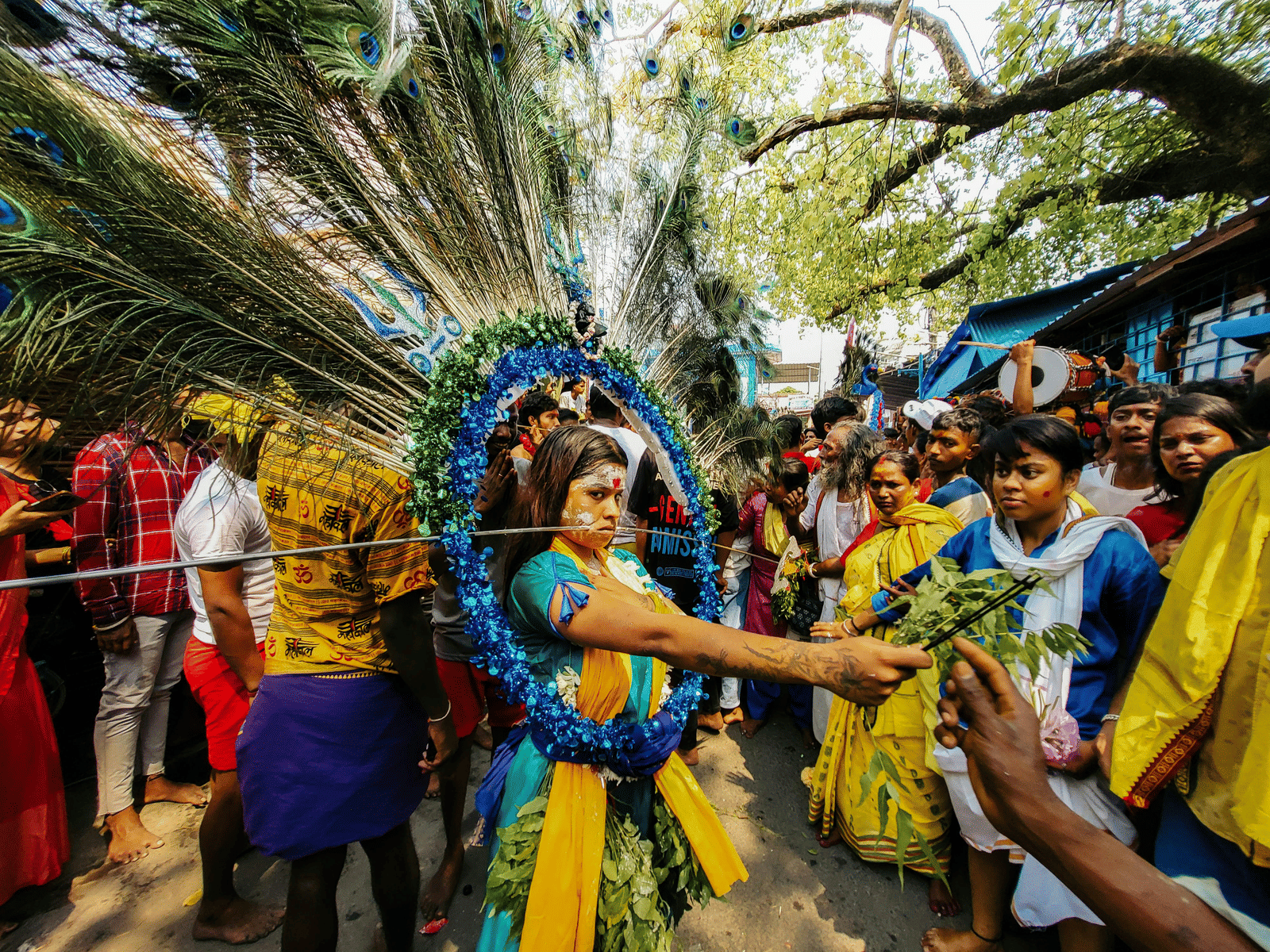
One of the best times to visit Sri Dhandayuthapani Swamy Thirukkovil is during Thaipusam in January or February, when the temple goes from peaceful pilgrimage spot to full-on spiritual blockbuster mode. Picture thousands of devotees carrying colourful Kavadi decked out in flowers, feathers, and ornaments, all moving in devotion and rhythm. Other festivals like Panguni Uthiram, Vaikasi Visakam, and Soora Samharam bring their own unique energy and charm, filling the temple with colour, faith, and festivity. The atmosphere during these celebrations is electric, emotional, and deeply moving, making it one of the most sought-after places to see in Palani during festival season.
And of course, no visit to Palani is complete without tasting the legendary Panchamirtham prasadam. Made with bananas, dates, ghee, honey, sugar, and cardamom, this sweet treat is basically the temple’s VIP souvenir. People say they are taking it home for family, but let us be honest… one spoon turns into five, and suddenly the ‘family box’ is mysteriously half-empty before you even leave Palani.
Things to Know Before Your Visit
- Temple Timings: 5:45 AM to 9:00 PM (with a lunch break)
- Winch & Ropeway Timings: 7:00 AM to 9:00 PM (with a lunch break)
- Attire: Modest and traditional clothing is recommended
- Photography: Not allowed inside the temple
- Entry Fee: Free for general entrance

Thiru Aavinnankudi - Blessings at the Foothills
If Arulmigu Sri Dhandayuthapani Swamy Thirukkovil is the crown of Palani, then Thiru Aavinnankudi Temple is the warm welcome at its feet. This ancient foothill shrine is one of those places to see in Palani that rewards the curious traveller who knows the journey begins before the climb. Nestled near the sacred ponds of Saravanapoigai and Vaiyaburi Kulam, the temple is mentioned in Sangam literature, which means it has been making headlines since ancient times.
It is also one of the six sacred Arupadai Veedu, giving it serious spiritual VIP status. One fascinating feature here is the Kodimaram (flagstaff), carved from a single stone. Yes, a single stone. No joints, no patchwork, just ancient craftsmanship casually showing off.

Story Behind the Name of Thiru Aavinnankudi Temple
The story behind the name Thiru Aavinnankudi begins with Lord Murugan's arrival in Palani after the famous fruit war with Lord Ganesha. But while Murugan was settling into the hills, a lot was happening around him. Several divine beings arrived at this very spot to perform penance and seek blessings. It was almost like Palani had suddenly become the ultimate spiritual hotspot.
The name Thiru Aavinnankudi is believed to come from the divine visitors who worshipped Lord Murugan here. Thiru refers to Goddess Lakshmi, Aa to Kamadhenu, the sacred cow, Inan to Surya, the Sun God, Ku to Bhoomi Devi, the Earth Goddess, and Di represents Agni and Vayu, the Gods of fire and wind. With so many celestial VIPs visiting at once, the place earned the sacred name Thiru Aavinnankudi.

History and Architecture of Thiru Aavinnankudi Temple
Thiru Aavinnankudi Temple is older than the famous hilltop Dhandayuthapani Swamy Temple, and in ancient times, all of Palani was referred to as Thiru Aavinnankudi. So before the hilltop temple stole the spotlight, this was the original star of the show.
Many kings who ruled Palani left their mark here over the centuries, each adding their own royal touch. However, one of the biggest glow-ups came between 1898 and 1910, when the temple was extensively renovated by N. M. Subramanian Chettiar. The temple also holds the distinction of being the Third House of the sacred Arupadai Veedu, making it far more than just a ‘quick stop’ before the climb. Spiritually speaking, this place is a very big deal.
The presiding deity here is Lord Murugan in his child form, seated gracefully on his peacock, radiating youthful charm and divine energy. The shrine is also known as Kulandai Velayudhaswami Temple. Kulandai means ‘child’, and Velayudha refers to the wielder of the sacred Vel. In short, this is Murugan in his adorable yet powerful era.
The main deity is accompanied by shrines dedicated to Lord Vinayaga, Annamalaiyar, Unnamulai Amman, and Dakshinamurthy. There is also a separate shrine for Shani Bhagavan, which draws a steady stream of devotees every Saturday.

Famous Festivals at Thiru Aavinnankudi Temple
The most famous festival here is Panguni Uthiram, and trust us, the temple knows how to put on a show. The celebrations begin with special pujas for sacred flags bearing the symbols of the rooster, peacock, and Vel, all closely associated with Lord Murugan. Once these flags are hoisted, consider the festival officially in motion.
From there, the energy only builds. Rituals like milk offerings, special prayers, and grand ceremonies take place as Lord Murugan, along with his consorts Goddess Valli and Goddess Deivanai, are beautifully adorned and worshipped. The festival continues for 10 glorious days, packed with devotion, music, and vibrant celebrations, all leading up to the grand temple car procession that draws huge crowds. On the day of Panguni Uthiram itself, devotees arrive from all over India in massive numbers, turning the temple into a sea of faith, colour, and celebration.
Other famous Murugan festivals like Thaipusam and Skanda Sashti are also celebrated here with equal grandeur. Safe to say, the festive calendar here stays fully booked.
Things to Know Before Your Visit
- Temple Timings: 6:00 AM to 7:30 PM; festival days open earlier
- Darshan Timings: Open throughout temple hours
- Photography: Not allowed inside the main sanctum
- Attire: Traditional dress and modest clothing
- Entry Fee: Free for general entrance

Arulmigu Periya Nayaki Amman Temple - The Town Temple Everyone Talks About
For many devotional travellers, especially those arriving from Kerala, this is often the very first stop among the holy places to visit in Palani, even before making their way to Dhandayuthapani Swamy Thirukkovil. You could say this temple is where the blessings officially begin. Locally known as the ‘Town Temple’, ‘Ur-k-Kovil’, and ‘Ur-Ambalam’, this place is so famous that the moment travellers step off at the bus stand, this is often the first temple they ask for. It is basically Palani’s original landmark.

History and Architecture of Periyanayaki Amman Temple
The presiding deity here is Goddess Periyanayaki, a form of Goddess Parvati. The temple’s most eye-catching feature is its divine seating arrangement. Lord Murugan sits at the centre, with Kailasanathar (Lord Shiva) to the north and Goddess Periyanayaki to the south. This sacred formation is known as the Somaskandar arrangement, a divine family portrait carved in stone long before family selfies were a thing.
The temple was first built by the Nayak dynasty, and the rulers who came later clearly did not believe in ‘keeping it simple’. The chieftains of Palani, Ayakudi, and Neikkarappatti kept expanding it over the years, each seemingly trying to outdo the last. Basically, this temple had centuries of upgrades until it became the grand beauty you see today.
The architecture is distinctly Nayak in style, with the main mandapam featuring towering black stone pillars covered in intricate carvings. Walking through it feels a bit like stepping into an ancient art gallery… except every masterpiece comes with divine blessings instead of a ‘Do Not Touch’ sign.
The temple also houses the vahanas (vehicles) of all the temples under the Devasthanam, making it something of a sacred parking lot. Among the stars of the collection are the dazzling silver chariot used during festival processions and the elegant ivory palanquin, both guaranteed to steal the spotlight the moment they roll out.

Famous Festivals at Arulmigu Periya Nayaki Amman Temple
This temple celebrates all the major festivals of Lord Murugan, so the festive calendar here is always busy. Thaipusam is celebrated with great devotion and grace, drawing crowds of pilgrims and devotees from all around.
One of the grandest celebrations here is the Chithirai Festival (April to May), when the temple truly comes alive. The presiding deity is taken in a colourful procession through the streets of Palani in a dazzling silver car, accompanied by traditional music, performances, and festive cheer. Safe to say, when the silver car rolls out, it steals the entire show.
The month of Aadi, between July and August, is another special time here, with Laksha Archanas or one lakh prayer offerings performed at the temple. Fridays in Aadi are especially crowded, proving that devotion definitely does not take weekends off.
During Vijayadashami, the tenth day of Navratri, one of the most spiritually powerful rituals takes place. The sacred lance of Palani Murugan Temple is brought down from the hilltop to this temple, creating one of the most emotionally charged and significant moments in Palani’s annual festival calendar.
Things to Know Before Your Visit
- Temple Timings: 6:00 AM to 8:00 PM
- Darshan Timings: 6:00 (morning aarti) | 5:30 PM (evening aarti)
- Photography: Not allowed inside the main sanctum
- Attire: Traditional dress and modest clothing
- Entry Fee: Free for general entrance

Darshan Guidance for Visiting Palani Temples
- Start your temple visits early in the morning to avoid crowds, cooler temperatures, and long queues.
- If you are planning to visit the hilltop Arulmigu Sri Dhandayuthapani Swamy Thirukkovil, wear comfortable footwear.
- Carry water, especially if you are climbing the steps. Faith is strong, but hydration helps.
- Senior citizens, families with children, and those not in the mood for surprise cardio can use the ropeway or winch to reach the hilltop temple.
- Keep cash handy for offerings, prasadam, special darshan tickets, parking, and local transport. Not every blessing comes with UPI.
- Festival days like Thaipusam and Panguni Uthiram attract huge crowds, so arrive early and book accommodation in advance.
- Avoid carrying too many valuables, as crowded temple areas can get hectic.
- If travelling with elders or young children, plan breaks between temple visits as the pilgrimage circuit can be tiring.
- Buy the famous Panchamirtham prasadam from official counters to ensure authenticity.
- Combine nearby temples like Thiru Aavinnankudi Temple and Arulmigu Periya Nayaki Amman Temple in one trip to save time and energy.
Related Read: The Meaning of Thaipusam in Palani

Palani Tourist Places that Let Nature Do the Talking!
The places to see in Palani go far beyond towering temple gopurams. The hills, the mist, and the waterfalls wrapped around this town create their own scenic little circuit, ready to surprise anyone who thought Palani was only about spiritual pit stops.

Idumban Hill - Where Murugan Drew the Line
This hill stands right beside Arulmigu Sri Dhandayuthapani Swamy Thirukkovil with a legend all its own. Remember the story of Idumban carrying the two hills, Sivagiri and Shaktigiri, across the land on a kavadi? Yes, this is that very story. Everything was going smoothly until Lord Murugan himself stepped in at Palani and basically said, “That’s far enough”. Talk about the most divine roadblock in history.
Today, the temple dedicated to Idumban on this hill is an important stop for devotees on their way to the Dhandayuthapani shrine. And the views from up here? Absolutely worth the climb. With the vast plains stretching below and the majestic Western Ghats rising in the distance, it is the kind of view that makes you pause, stare, and completely forget the rest of your itinerary… and maybe your leg pain too.

Palani Hills Viewpoints - Above the Temples, near the Clouds
These viewpoints deliver exactly what the hills have been teasing you with from the town below. The majestic Western Ghats stretch across the horizon in endless shades of green, looking like nature really took its time here. On clear mornings between October and February, the mist hangs so low it almost feels like you could reach out, stir it around, and serve yourself a cup.
The best part? Many of these viewpoints are easily accessible by road, so you can enjoy all the drama without committing to a mountain-climbing career. After a full day of temple visits, this unhurried panorama is the perfect reward… part peace, part postcard, and fully worth the stop.

Thotti Madai Waterfalls - Palani’s Seasonal Showstopper
This seasonal spot is easily one of the most loved Palani tourist places among locals and adventure seekers alike. Best seen during and after the monsoon months, this hidden gem in the hills near Palani rewards those willing to put in a little legwork. The trek takes you through lush greenery, rocky paths, and enough scenic drama to keep you saying, “Are we there yet?” in the most excited way possible.
Visit between October and January for the best flow and the easiest trail. Any earlier and you may meet too much mud. Any later and the waterfall may decide it is off-duty.

Places to Visit near Palani - Day Trips Worth Every Kilometre
Once you have covered the town's offerings, the places to visit near Palani open up a set of day trips that range from misty hill stations to reservoirs with an unexpected wildlife drama.
Amaravathi Dam - The Coolest Dam near Palani
If you are wondering, “What can a dam possibly offer?”… quite a lot, actually, my friend. Located about 40 km from Palani, Amaravathi Dam may have been built for irrigation and flood control, but it has since upgraded itself into a full-on outing spot. It even doubles as a mini hydroelectric facility, so yes, it is productive and pretty.
The massive reservoir here attracts a steady crowd of mugger crocodiles, who seem to have completely taken over the sunny banks like they own the place. There is even a crocodile farm nearby that you can visit if you are in the mood to meet some very relaxed but slightly terrifying locals.
Not in the mood for crocodile staring? No problem. The park near the dam is perfect for laid-back family moments, scenic walks, and the kind of peaceful sitting-around-doing-nothing that somehow feels productive on holiday.
And yes, there is more. The nearby grasslands and open spaces are great for spotting birds and soaking in nature without a crowd around. Amaravathi Dam is one of those surprisingly well-rounded places to visit near Palani that sneaks up on you.

Kodaikanal - The Princess Next Door
About 65 km from Palani, Kodaikanal is lovingly called the ‘Princess of Hill Stations’, and honestly, she lives up to the title. Think misty mornings, a star-shaped lake, cosy boat rides, and air so fresh it makes you suddenly believe in deep breathing. The kind of place where you naturally slow down, sip something hot, and pretend you have no emails waiting.
The drive from Palani to Kodaikanal is half the fun. It is a winding adventure of hairpin bends, forest canopies, and views that keep getting better the higher you go. If you have an extra day after exploring Palani, Kodaikanal is the perfect next chapter.
Related Read: Tourist Attractions in Kodaikanal

Sirumalai - The Scenic Secret near Palani
Roughly 90 km from Palani, Sirumalai is for those who like their getaways a little quieter and a lot greener. No big crowds, no noisy tourist chaos, just peaceful roads, chirping birds, and the kind of cool breeze that makes you want to stay longer than planned.
These hills are perfect for birdwatching, scenic drives, and long walks where the only traffic jam might be a family of monkeys deciding the road is theirs. As you leave behind the temple plains of Palani, the landscape slowly transforms into lush forests and secluded valleys, and honestly, the journey itself feels like therapy.
Visit during the post-monsoon months and you may spot little waterfalls showing off along the way, adding bonus ‘wow’ moments to the drive. Sirumalai may not be on every traveller’s itinerary, but that is exactly what makes one of the best places to visit near Palani. Less crowded, more charming, and quietly waiting for those who know where to look.

When to Visit Palani for Maximum Magic
Winter Season in Palani (October to February)
Winter is when Palani is in its soft-launch era. The weather turns cool, the skies stay clear, and the mornings come with just the right amount of mist to make every photo look professionally edited. It is hands-down one of the best times to visit Palani, whether you are climbing up to Arulmigu Sri Dhandayuthapani Swamy Thirukkovil, taking in the views from Idumban Hill, or pretending to be in a travel ad at the Palani Hills viewpoints.
This is also the perfect season for scenic drives, waterfall visits, and spontaneous “let’s go to Kodaikanal” plans.
Festival Season in Palani (January to April)
If winter is Palani looking pretty, festival season is Palani going full blockbuster mode. This is when the town swaps calm temple vibes for colour, music, processions, and enough spiritual energy to power a city.
Famous festivals like Thaipusam in January or February and Panguni Uthiram in March or April transform the streets into a sea of decorated Kavadi, temple rituals, and devoted crowds. Expect drums, devotion, flowers, feathers, and the occasional “Where did all these people come from?” moment.
If you want to experience Palani at its loudest, brightest, and most unforgettable, this is your season.

Reaching Palani Without the Guesswork
Getting to Palani is easier than finding excuses to skip the temple steps. Whether you are flying in, hopping on a train, or rolling in by bus, this spiritual town is well connected from all directions.
- Nearest Airport: The closest airport to Palani is Coimbatore International Airport, around 115 km away. From there, you can hire a taxi or catch a bus to Palani. Madurai Airport (~141 km) is another convenient option for travellers coming from other major cities.
- Nearest Railway Station: Palani Railway Station sits right at the heart of the town and connects Palani to major cities like Coimbatore, Madurai, Chennai, and beyond. Step off the train, and the pilgrimage vibes begin almost instantly.
- Nearest Bus Stand: Palani Bus Stand is located right in town and has frequent government and private buses from major cities across Tamil Nadu and neighbouring Kerala.

Local Transport Options in Palani
Getting around Palani is simple and convenient, with several local transport options available for temple visits, sightseeing, and day trips to nearby attractions. Whether you are travelling between the famous temples in Palani or heading out to scenic spots nearby, choosing the right mode of transport can make your journey smoother.
- Auto-rickshaws: Best for short trips within Palani and temple hopping. Confirm fares before starting.
- Taxis and Cabs: Ideal for families and day trips to Amaravathi Dam, Kodaikanal, and Sirumalai Hills.
- Local Buses: Budget-friendly travel within Palani and nearby towns.
- Rental Cars: Great for flexible sightseeing and multiple stops.
- Bikes and Scooters: Perfect for solo travellers and couples exploring at their own pace.
- Ropeway and Winch: Easy access to the hilltop Arulmigu Sri Dhandayuthapani Swamy Thirukkovil without the climb.

Regency Palani by GRT Hotels - Your Base Camp for All of It
After a morning of darshan, a heroic climb up countless steps, two temple visits, and a ‘quick’ viewpoint stop that somehow turned into an hour, the only thing your legs are praying for is a soft bed. Regency Palani by GRT Hotels comes to the rescue. Located just 900 m from Arulmigu Periya Nayaki Amman Temple and 6 km from Arulmigu Sri Dhandayuthapani Swamy Thirukkovil, we keep the most famous holy places to visit in Palani comfortably within easy reach of our stay… and your recovering knees.

Rooms You’ll Actually Want to Stay In
- Superior Room (260 sq. ft.): A calm and well-appointed retreat with a cosy queen size bed, perfect for solo travellers and couples looking for a restful stay in Palani after a long day of temple hopping.
- Deluxe Room (325 sq. ft.): Enjoy extra space and comfort with a choice of queen or twin beds. Perfect for friends, colleagues, or anyone who loves their travel companion… but still appreciates a little personal space.
- Suite (575 sq. ft.): Spacious and indulgent, with a separate living area perfect for longer stays, family trips, or those “we’ll leave after one more episode” nights before exploring more of Palani.
Flavours Worth Waking Up For
Our Dhanyam restaurant serves a South Indian breakfast buffet that is colourful, varied, and the kind that makes you question whether you really needed to book that first darshan slot quite so early. Madhuram bar is the right place to end an evening, with cocktails that lean into local flavours and a laid-back energy that matches the town's pace by sundown.
Explore Dining Outlets

The Little Things that Go a Long Way
- Free Shuttle Service: Temple runs just got easier. Skip the auto-rickshaw bargaining and odd-hour transport drama, and head to the holy places in Palani at your own pace.
- Skanda Lounge: A serene meditation space inspired by the spiritual soul of Palani. Think morning breathwork, post-darshan reflection sessions, soothing evening bhajans, and quiet nighttime gratitude pauses.
- Pet-friendly Stay: Your furry travel companion is welcome too, because holidays are better when the whole family checks in.
- Zeon EV Charging Station: Travelling green? Charge up your electric vehicle while you recharge yourself. Sustainable travel with zero stress.

Add Palani to Your Must-visit List
If you are planning a trip and looking for somewhere a little offbeat, Palani deserves a spot high on your list. The places to visit in Palani range from hilltop shrines of extraordinary spiritual significance to ancient foothill temples, scenic viewpoints, and cascading waterfalls. In short, it is one of those rare destinations that has something for every kind of traveller, whether you are chasing blessings, views, or both.
Extend your trip a little further, and the places to visit near Palani open up even more adventures. Think misty escapes in Kodaikanal, peaceful drives through Sirumalai Hills, and a visit to Amaravathi Dam, where the crocodiles seem far too confident for comfort. It is the kind of full trip you will casually bring up in every conversation afterwards.
And through all of it, Regency Palani by GRT Hotels stays exactly what you need it to be. Warm, comfortable, and perfectly placed. It takes care of the practical side of things, so you can focus on temple trails, mountain views, and figuring out how you somehow finished an entire box of Panchamirtham on your own.
FAQs
What are the best places to visit in Palani?
The must-visit stops include Arulmigu Sri Dhandayuthapani Swamy Thirukkovil on Sivagiri Hill, Thiru Aavinnankudi temple at the foothills, Arulmigu Periya Nayaki Amman Temple in the heart of town, Idumban Hill, Thotti Madai Waterfalls, and the Palani Hills viewpoints.
What are the best temples in Palani for first-time visitors?
First-time visitors should start with Thiru Aavinnankudi temple at the foothills, then proceed to Arulmigu Sri Dhandayuthapani Swamy Thirukkovil on the hill, and follow up with Arulmigu Periya Nayaki Amman Temple in town. This sequence follows the traditional pilgrim route and covers Palani's most significant spiritual stops in a single day.
Should I take the ropeway or climb the steps at the Dhandayuthapani Swamy Thirukkovil temple?
Both are valid options. The ropeway takes approximately 3 minutes and covers 323 metres. The traditional step path offers a more immersive experience, though it may not be ideal for senior citizens.
What is the best time to visit the Palani tourist places?
October to February is the most comfortable time to visit Palani. The weather is cool, the hills are clear, and post-monsoon waterfalls are flowing. Thai Poosam (January to February) and Panguni Uthiram (March to April) are the most atmospheric festival periods if you want to experience the town at its most vibrant.
What is the history of Arulmigu Periya Nayaki Amman Temple?
The temple was built approximately four centuries ago by the Nayaks and later expanded by chieftains of Palani, Ayakudi, and Neikkarappatti.
What are the best places to visit near Palani for a day trip?
Kodaikanal (~65 km) is the most popular day trip, offering misty hill station scenery, a star-shaped lake, and scenic drives through the Palani Hills. Amaravathi Dam (~40 km) is ideal for a quick nature outing with views and wildlife, including mugger crocodiles. Sirumalai (~90 km) is excellent for birdwatching and quieter hill drives.
Can I visit Thotti Madai Waterfalls from Palani?
Yes. Thotti Madai Waterfalls are accessible from Palani by bus. The falls are best visited between October and January when water levels are at their peak.
Is Regency Palani by GRT Hotels a good place to stay in Palani?
Yes. With a free shuttle to major temples, comfortable rooms, great dining, and thoughtful facilities, Regency Palani by GRT Hotels is one of the best stay options in Palani.
Continue your booking